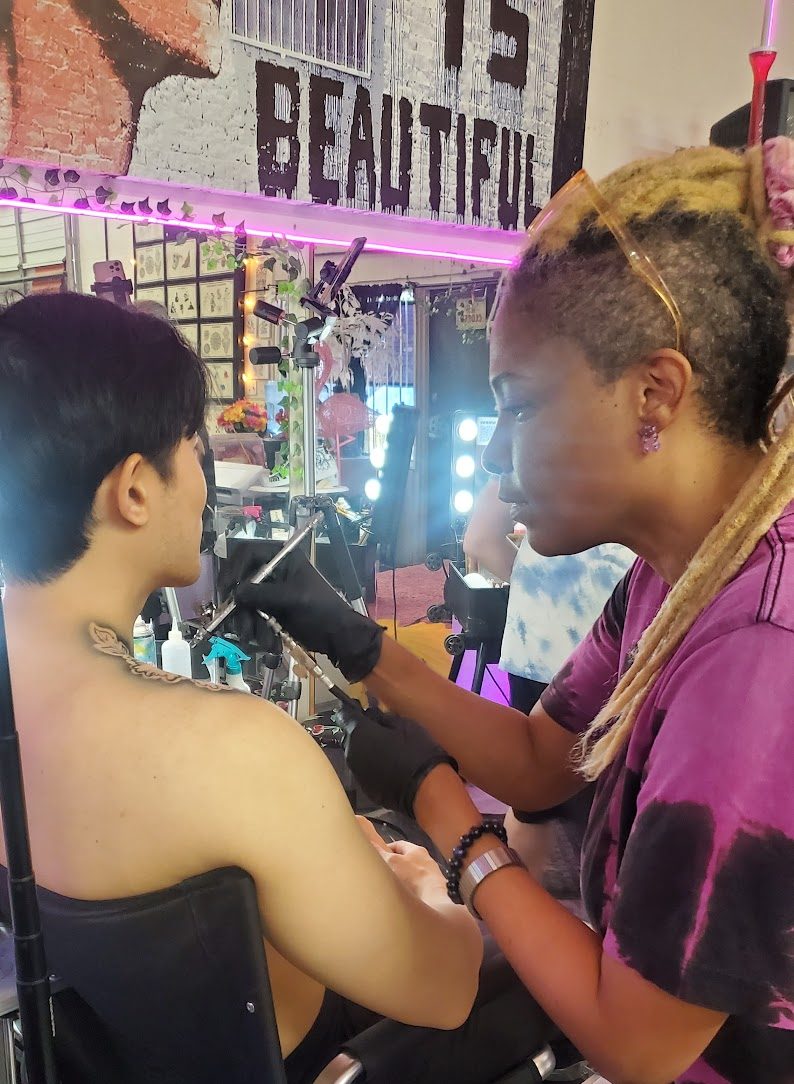
How to Airbrush for Hours Without Pain (Lessons from 40 Years)
The Injury Nobody Talks About
We all know the stereotype of the “starving artist.” But what about the aching artist? The one with the sore back, the cramped hand, and the neck that feels like it’s been tied in a knot.
That’s the reality for thousands of airbrush artists, and nobody talks about it. We get so lost in our creative flow that we ignore our bodies, and we pay the price later. I’ve seen incredibly talented people quit the craft not because they lost their passion, but because they were in too much pain to continue.
After 40 years of professional airbrushing—including 16 years on my feet doing 12-hour days on Hollywood sets and 500-person live events—I learned a hard lesson: your career isn’t sustainable if your body gives out.
This isn’t about “Zen.” This is about the practical science of ergonomics. It’s about setting up your workspace and your habits so you can create amazing art for decades to come, pain-free.
Why Your Body Hurts: The Science of Repetitive Strain
Ergonomics is just a fancy word for fitting your environment to your body, instead of forcing your body to fit your environment. When you ignore it, you get Repetitive Strain Injuries (RSIs).
Think about it: you’re making thousands of tiny, precise movements with your hand, often while hunched over a table for hours. When you do that with bad posture or a tense grip, you’re putting unnatural stress on your muscles, tendons, and nerves. Do that day after day, and you’re on a fast track to chronic pain, carpal tunnel syndrome, or worse.
The Science Behind Proper Airbrushing Posture
Let’s get a little scientific for a moment. Studies have shown that artists, including airbrush artists, are prone to repetitive strain injuries. These occur when we repeat the same motions over and over in less-than-ideal positions.
When we hunch over our work, we’re putting unnecessary strain on our back, neck, and shoulders. And when we grip our airbrush too tightly, we’re asking for trouble in our hands and wrists. But when we sit or stand with proper posture and hold our airbrush with a relaxed grip, we’re allowing our body to work as it’s designed to. This not only prevents pain but also improves our control and precision.
But here’s the good news: almost all of this is preventable. By making a few simple adjustments, you can dramatically reduce the strain on your body, improve your control, and extend your artistic career by decades.
Your Pain-Free Workspace: A 3-Step Audit
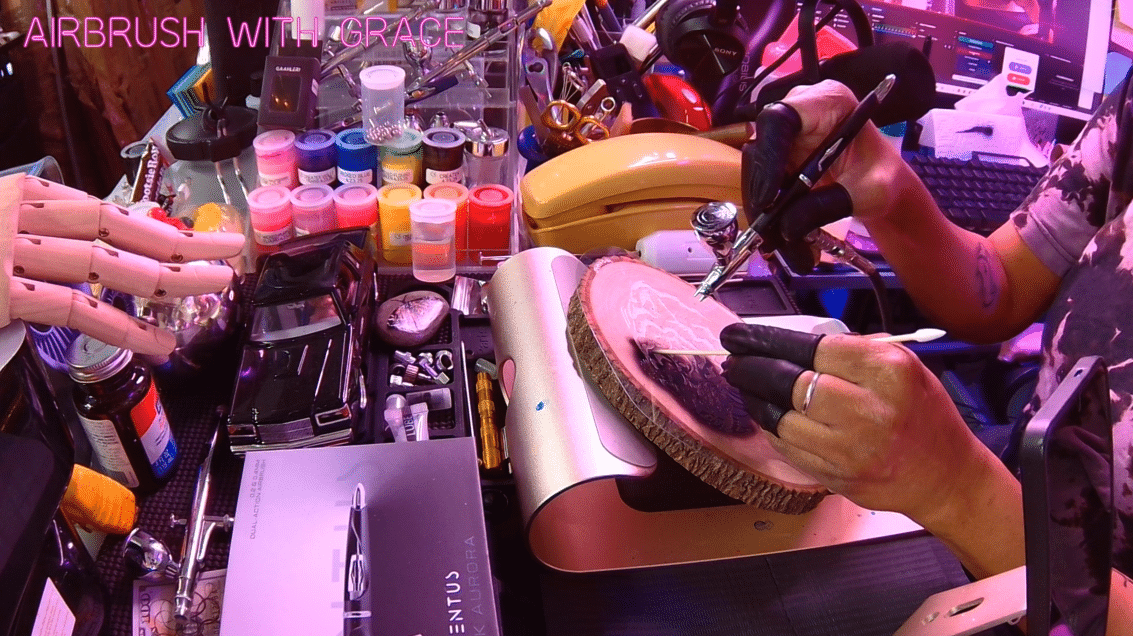
Let’s audit your current setup. These three things are non-negotiable.
1. Your Chair & Table Height: Whether you sit or stand, your work surface should be at a height where your elbows are at a comfortable 90-degree angle. If you’re sitting, your feet should be flat on the floor. If you’re standing for long sessions, get an anti-fatigue mat. This isn’t a luxury; it’s a necessity.
2. Your Lighting: Bad lighting causes you to hunch forward to see your work, which is a direct cause of neck and back pain. You need bright, diffused, neutral-colored light that illuminates your work without creating glare. Don’t rely on a single overhead lamp. Get adjustable task lighting.
3. Your Tool Layout: Arrange your airbrush holder, paints, and cleaning station within easy reach. If you have to constantly twist or stretch to grab something, you’re adding hundreds of unnecessary micro-strains to your body every session.
How to Hold Your Airbrush (You Could Be Doing It Wrong)
Watch a beginner hold an airbrush, and you’ll see a white-knuckled death grip. This is the single fastest way to cause hand and wrist pain.
Hold your airbrush with a light, relaxed touch. Think of it like holding a pencil, not a hammer. The airbrush should rest gently in your hand. All the control comes from the fine motor movements of your trigger finger, not from squeezing the body of the tool.
The Posture That Will Save Your Career
I can’t stress this enough: your posture is everything. Hunching over your work is a career-ending habit. Here’s the difference: Here’s an example below of me using an easel that is too low. Notice how I bend from the neck and waist towards the art?
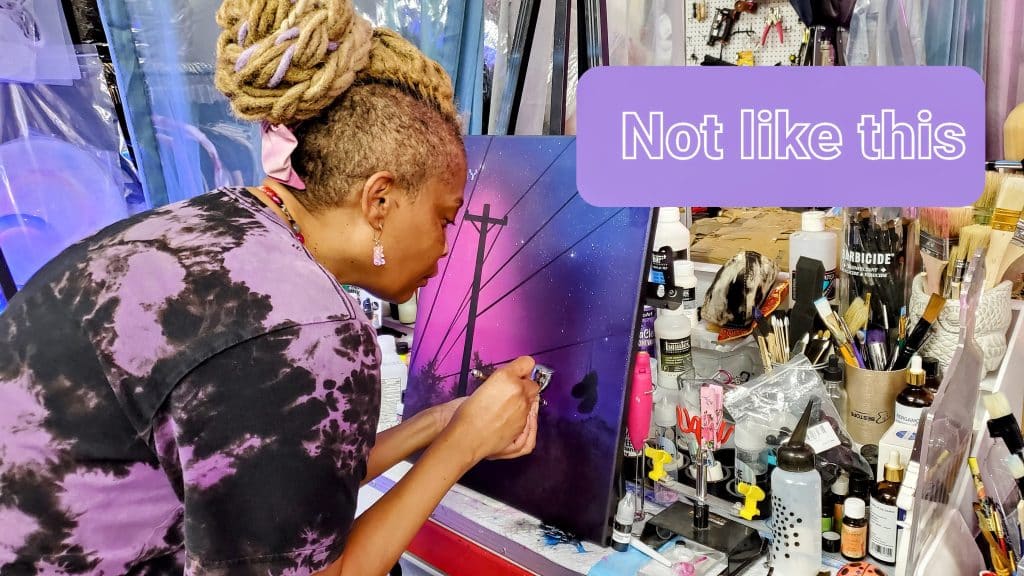
This is the “6-months-to-back-pain” pose. Notice how my neck and shoulders are strained? This is unsustainable.
Making this bad posture a habit causes a slouch that could contribute to pain and permanent posture issues. Ouch! This piece should be at a level where I don’t have to bend over like in the image below.
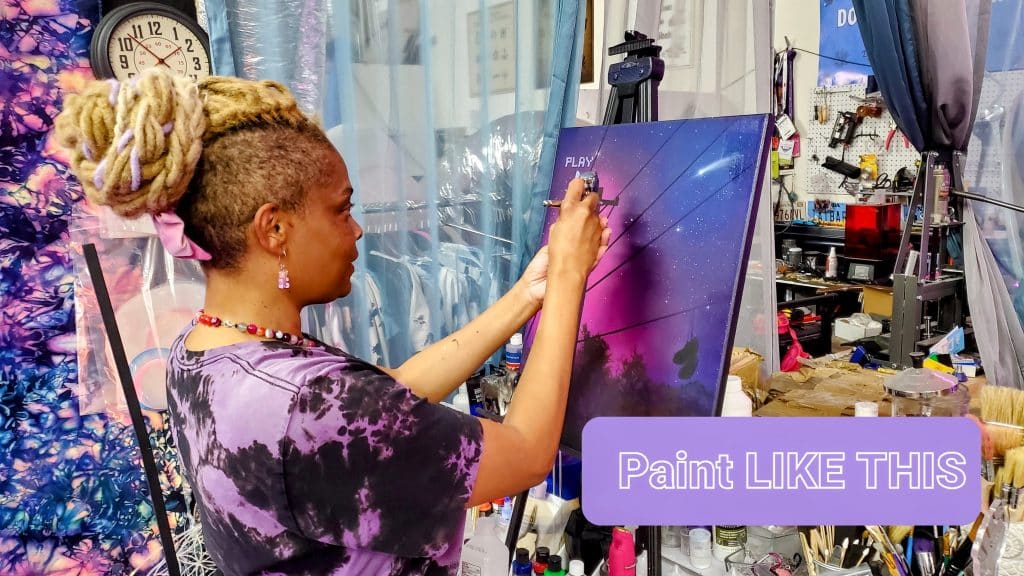
This is the professional pose. My back is straight, my core is engaged, and my arms are supported. I can work like this for 8 hours straight.
To achieve this, you might need to raise your work surface or get an adjustable easel. It is a worthy investment in your health and your career.
The 20-20-20 Rule (Plus Breaks)
Your body isn’t meant to stay in one position for hours. You need to take breaks.
The 20-20-20 Rule: Every 20 minutes, look at something 20 feet away for 20 seconds. This gives your eyes a break from close-up focus.
The 5-Minute Stretch: Every hour, get up and move. Roll your shoulders, stretch your neck, shake out your hands. It might feel like you’re breaking your flow, but I promise you, it will actually improve your focus when you return to your work.
Don’t Learn Bad Habits
This is where our practice of Zen Airbrushing really comes into play. By increasing our body awareness, we can catch and correct poor ergonomic habits before they cause problems. Try this simple body scan meditation:
- Close your eyes and take a deep breath.
- Starting from your toes, focus your attention on each part of your body, moving upwards.
- Notice any areas of tension or discomfort.
- As you exhale, imagine releasing any tension you’ve found.
By regularly checking in with your body this way, you’ll become more attuned to tension or discomfort as it arises, allowing you to adjust your position or take a break when needed.
The Long-Term Benefits of Ergonomic Practice
It’s much easier to build good habits from the start than to break bad ones later. Proper ergonomics and posture are core components of the PHAZE 1 curriculum in the Airbrush with Grace™ platform.
We teach you how to set up your workspace and hold your tools correctly from day one, so you can build a long, healthy, and successful artistic career.
Join the AWG Entry Portal (FREE) and Learn the Right Habits
Your Art Shouldn’t Hurt
Creating art should be a source of joy, not a source of chronic pain. By investing a little time and thought into your ergonomics, you are making a direct investment in your future as an artist.
Take this seriously. Your body is your most important tool. Protect it.
Ready to build a sustainable practice?
1. Join the AWG Entry Portal (FREE) to learn the fundamentals of pain-free artistry.
2. Shop for professional stencils at The Stencil Foundry that help you create better art with less strain.